
 |
GENERAL INFORMATION |
|
LOCATION |
|
SCIENTIFIC SERVICES & LABORATORIES |
|
LINKS |
|
ANNUAL REPORTS |
| GOOD PRACTICE CODE CSIC |
FOLLOW THE LAST NEWS
|
|


News


"IEM scientists unravel how one of the most promising therapies against HER2+ breast cancer works
I IEM participates in the organization of a new Maria Skłodowska-Curie Coloquium .
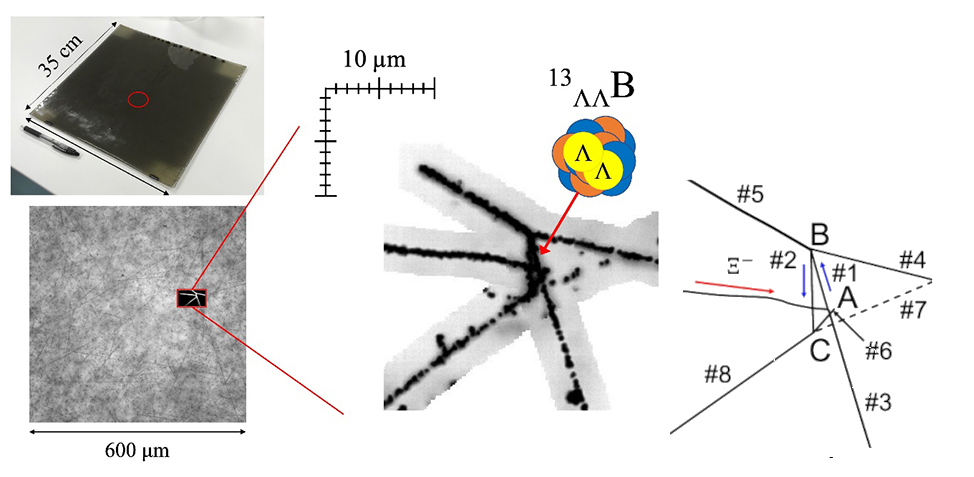
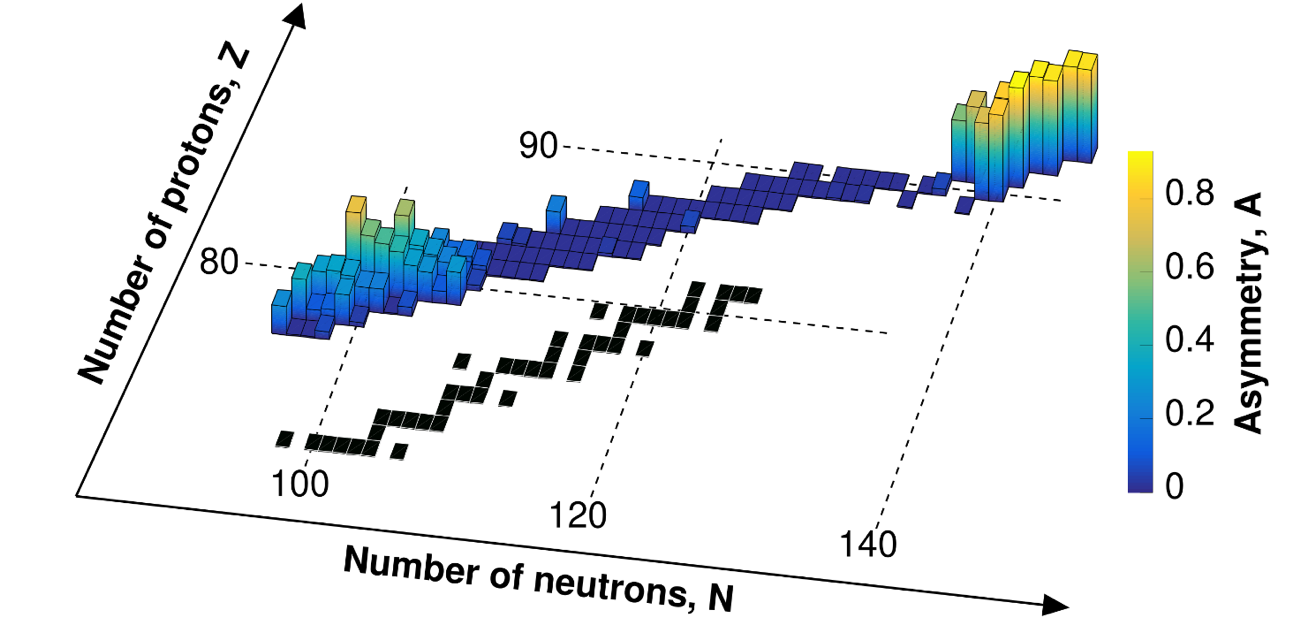
Nature publishes a groundbreaking discovery on nuclear fission with the participation of the IEM.
IEM researchers participate in the creation of the first entirely Spanish proton tomography scanner. The European Phys. J. Plus. DOI: 10.1140/epjp/s13360-024-05203-1


SARS-CoV-2 contingency plan for CFMAC and its Institutes
(version 8. 04-20-2022)


IEM
C/ Serrano, 113 bis, 119,
121 y 123.
Madrid 28006 (ESPAÑA).
Tel. +34 91 561 6800


-
First page of European Physical Journal-A: Novel analysis of proton- coincidences for the -delayed proton emission technique. Eur. Phys. J. A 62, 188 (2026))
-
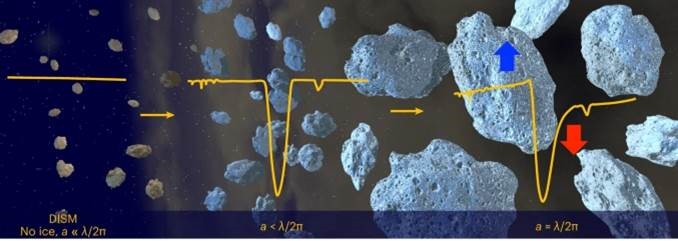
Cosmic dust is one of the fundamental ingredients of the universe (Nature Astronomy. DOI: 10.1038/s41550-026-02854-1)
-
AI opens a new window into the hidden world of nuclear matter
-
IEM scientists unravel how one of the most promising therapies against HER2+ breast cancer works

-
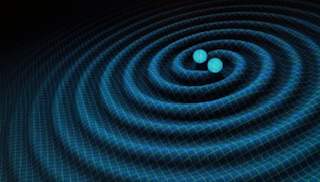
IEM researches participate in "REDONGRA", a network to boost the rol of spain in astronomy of gravitational waves
Nature publishes a groundbreaking discovery on nuclear fission with the participation of the IEM. DOI: https://doi.org/10.1038/s41586-025-08882-7
IEM researchers are participating in two articles published in "Nature Astronomy" on the nature of stellar ices.
IEM researchers participate in the creation of the first fully spanish proton tomography sacnner.The European Physicascannerl Journal Plus. DOI: 10.1140/epjp/s13360-024-05203-1

IEM HIGHLIGHT: Researchers of the IEM explore the first stages of crystallization in noble gases using X-ray diffraction at the "European X-ray Free Electron Laser (XFEL)". Physical Review Letters:doi.org/10.1103/PhysRevLett.132.206102
On 12/12/2023 the Complutense University of Madrid has granted a distinction to the IEM as a Collaborating Entity in the UCM Internship Programs (Deputy Director, María Luisa Senent, has received the award.
On November 15th 2023 the President of CSIC inaugurated The CFMAC "Colina de los Chopos" Astromic Observatory

IEM highlight: Superconducting Graphene
Nature Communications DOI: 10.1038/s41467-023-38250-w
IEM HIGHLIGHT: New method reveals intricate behaviors of micron-sized particles in human tears. Physics of Fluids
Featured Article in DOI: 10.1063/5.0152482
|
Institute for
the Structure of Matter
The IEM was established in 1976. Initially, the Institute was formed by several researchers working on the fields of Particle Physics, Molecular Physics, Quantum Chemistry, and Crystalline Polymers, with only five scientists on staff. Nowadays the Institute's core mission is to enhance knowledge on the structure of matter in a wide range of physical scales, from the building blocks of matter and space-time, to nuclei, atoms, molecules, and macromolecules, including condensed matter and mesoscopic systems. Research activities are organized around groups, both experimental and theoretical, covering fields of Gravitational, Nuclear, Statistical, Atomic, Molecular, and Macromolecular Physics. Part of this research is based on large national and international facilities, such is the case for the groups of Experimental Nuclear Physics, Statistical Physics, and Macromolecular Physics. Currently, the IEM comprises about 45 staff scientists. IEM participates in over 60 research projects, yielding an average of 165 publications per year in prestigious scientific journals. Staff scientists, along with support staff, students and hired personnel add up to about 135 people. Since 1994 the IEM belongs to the "Miguel Antonio Catalán" Physics Center (CFMAC) . Its facilities and laboratories are located in four buildings at the main CSIC campus on Serrano St. in Madrid , which also house the facilities of the Institute of Optics and the Institute of Fundamental Physics . |
Departments
 |
The IEM has the following departments:
Theoretical Physics and Chemistry
Optical Spectroscopies of Nanostructures and Disorderd Media Spectroscopy
Directory
 |
Here you will find the list of members of the Institute, as well as the office number, phone extension, and e-mail address.
Support Units
 |
This section contains the different Service Units of the Institute, such as Administration, Maintenance, Warehouse, Library, etc.